As I approached my final thesis, I was drawn to the overlap between strategic design, systems thinking, and real-world impact. I was — and still am — deeply concerned about the grand challenges we face: climate crisis, growing inequality, loneliness, and regional disparities.
These are not problems the public sector can solve alone. And the private sector isn’t always incentivized to act. I believe design must help create spaces and services that empower communities to respond creatively and collectively.
I was intrigued by the infamous public libraries that are emerging in Scandinavia. I was interested in understanding the Scandinavian libraries’ approach to promoting a just society and opening up the debate on local or national politics to all.
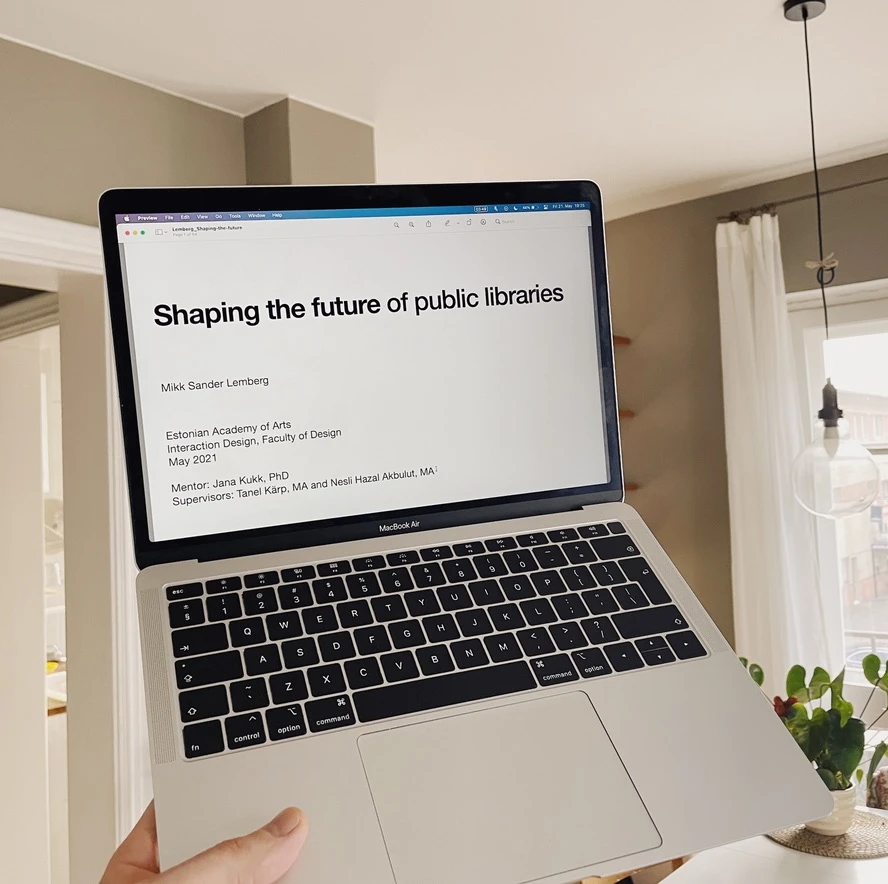
Project objective
With public libraries as the subject and Estonia as the context, I asked two main questions in my research:
-
What are the expectations of a modern public library service?
-
How can they adapt to future needs while staying grounded in community relevance?
Ultimately, the main goal of the research was to find a design approach for public libraries to become inspiring service providers that “support lifelong learning and ensure access to information, knowledge and culture”
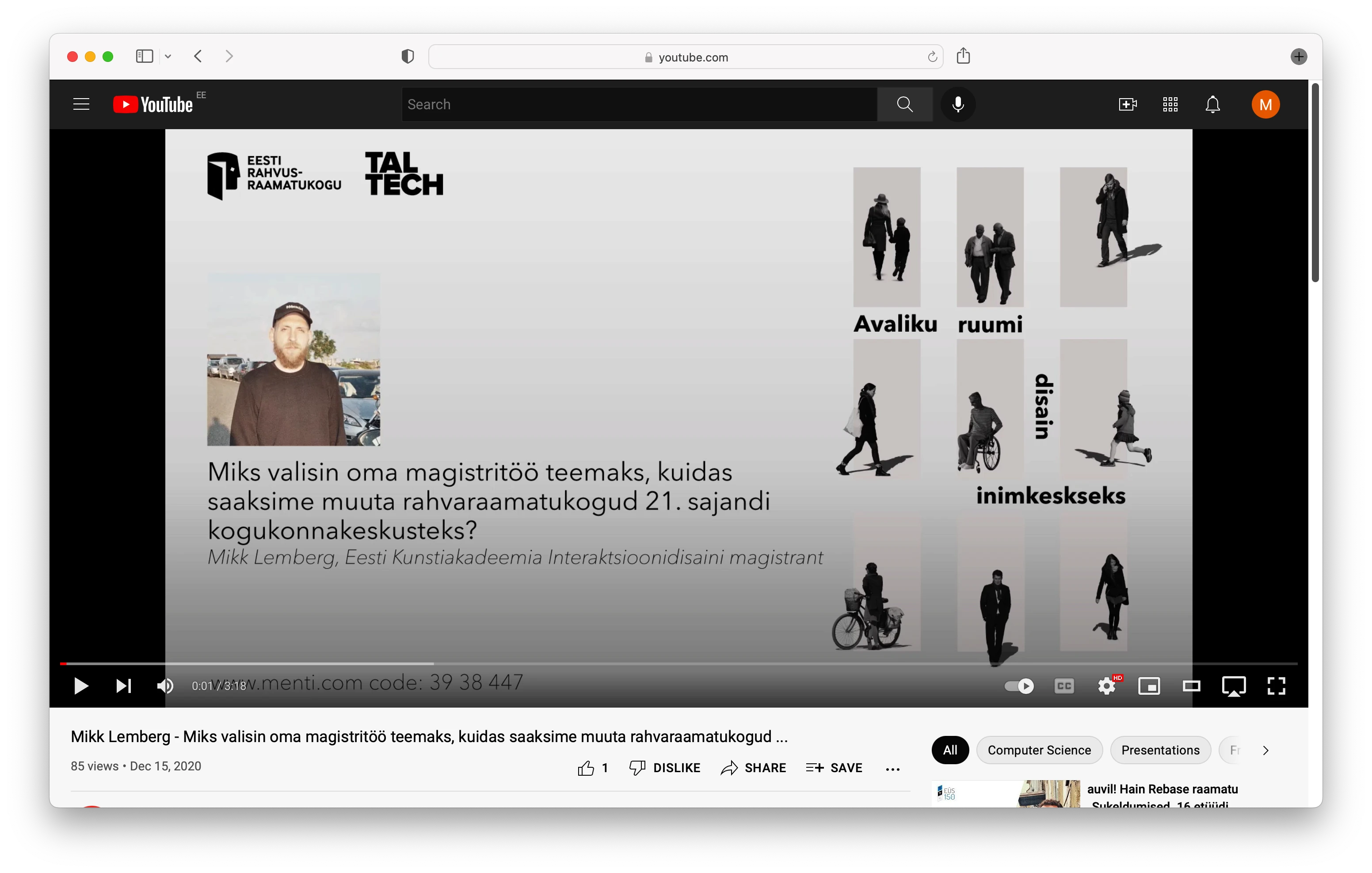
I spoke at Service Design conference (in Estonian) ↗
The concept for public libraries
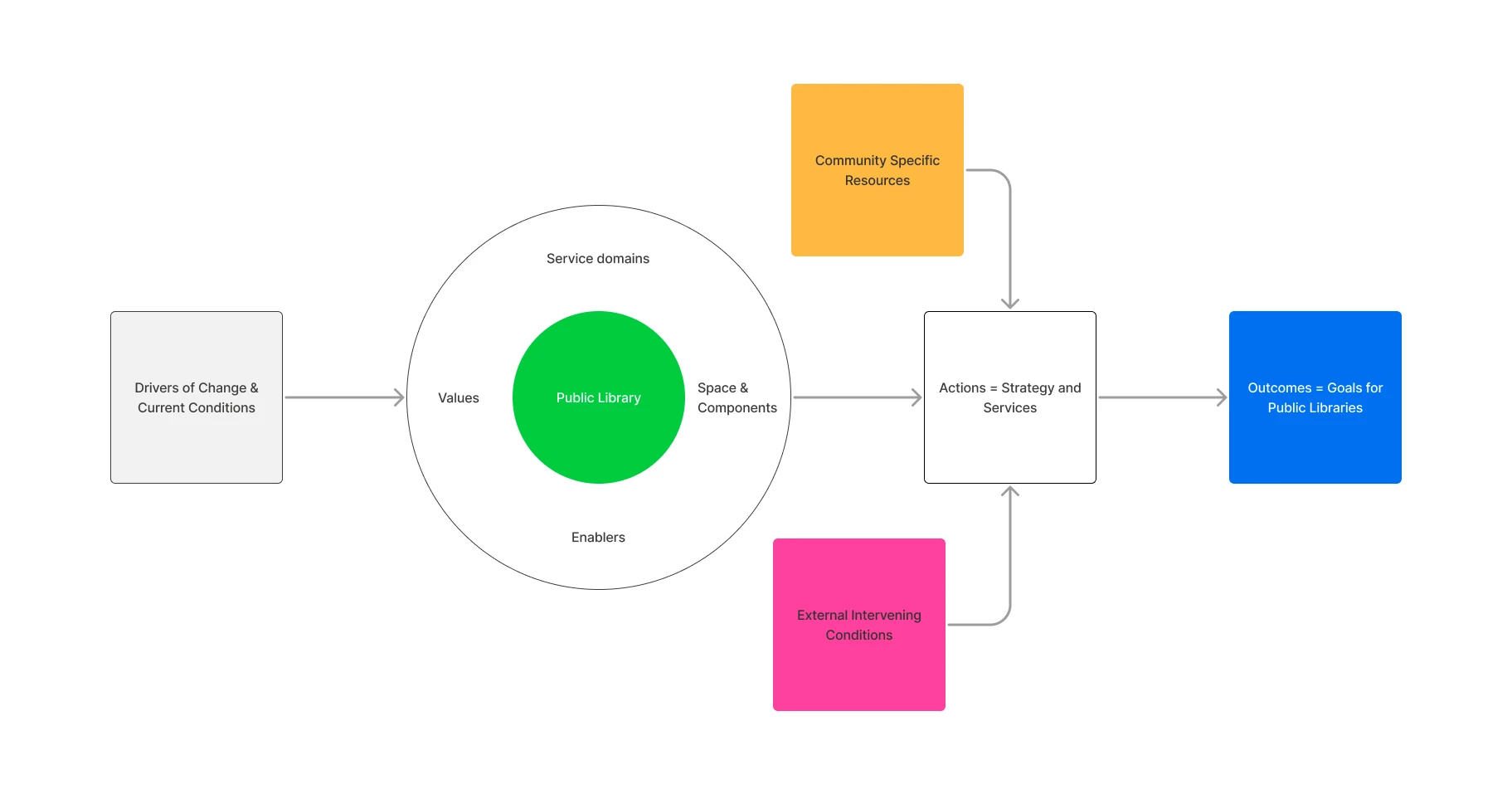
After desktop research and expert interviews, I developed a model for thinking about the future of public libraries.
I wanted to foster discussion about the role of libraries, their goals, and how services are delivered among different stakeholders and decision makers who have different experiences with libraries.
Inspired by Ezio Manzini, Dan Hill and the Helsinki Design Lab’s co-producing approach, I have defined “the future” in my work as the current needs of the community. This means that I accept that people know best what services they need and how.
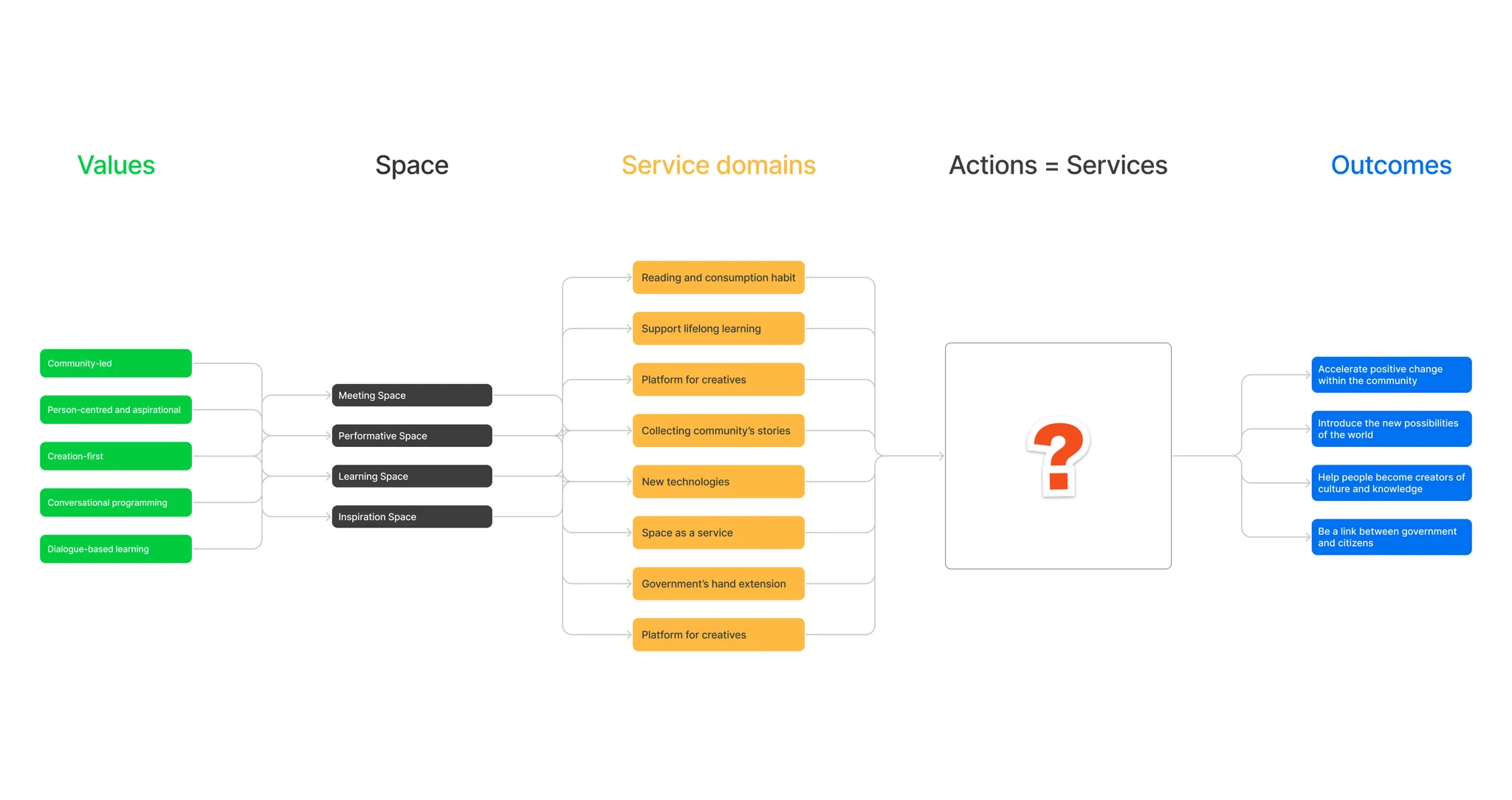
By combining a variety of elements, I ended up with a model that clearly and succinctly focuses on the many aspects of the public library.
-
On one side: shared outcomes — the societal goals libraries should aim for
-
On the other: context-specific inputs — each library’s resources, local conditions, and constraints
The model serves as a strategic tool for library leadership, policymakers, and service designers to think together about what kind of library is needed — and how to shape it collaboratively.
Putting the model into practice
Now that I had a model for public library services, I was eager to learn what people’s expectations for outcomes.
I decided to hold workshops with different stakeholders. The main goal of my workshops was to understand the different perspectives about the possible outcomes of public libraries. If we agree on the outcomes or goals that public libraries should achieve, we can design library services accordingly.
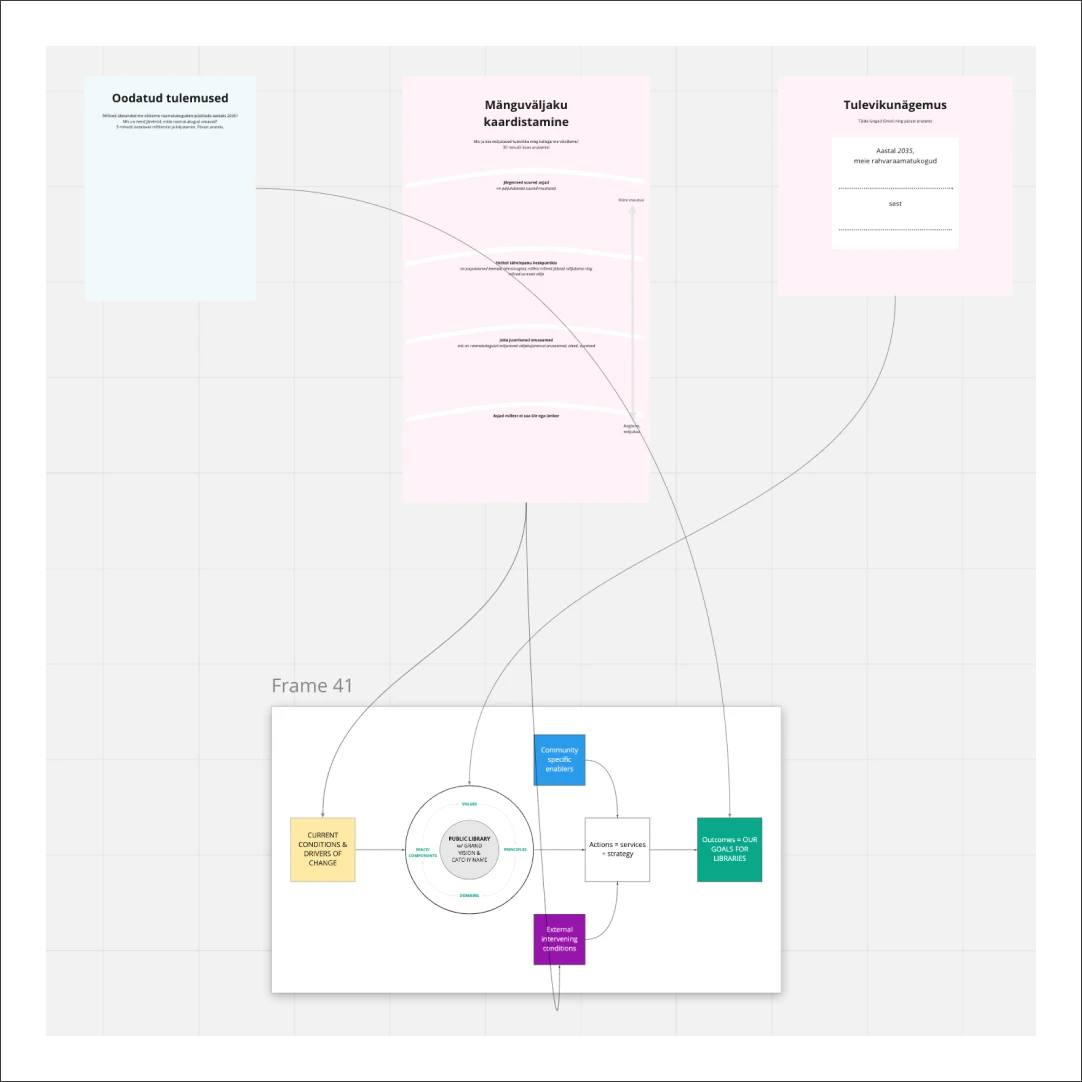
The structure of the workshop
Aside from the warm-up exercise, my workshop consisted of three activities that served as input for different parts of my model concept.
The first activity was “Expected Outcomes” I formulated the question to the participants, “What outcomes would you like to see public libraries achieve in 2035?
I chose the year 2035 because it is far away, but not as abstract as when you think of a future library. I also used the year 2035 in the very last exercise.
The second activity in my workshop is the playground mapping exercise. It comes from Nordkapp’s Actionable Futures toolkit. Public library redesign is a complex project. Therefore, it is important to understand the different aspects of the environment. This exercise helps to understand what ideas, initiatives, technologies and who dominates now and in the future.
The final exercise is to develop a vision statement. The goal was for each participant to think about an optimal future and what it might look like. Forcing them to fill in the blanks makes the description of the future tangible and concrete. And then collectively create a statement as a result of the workshop.
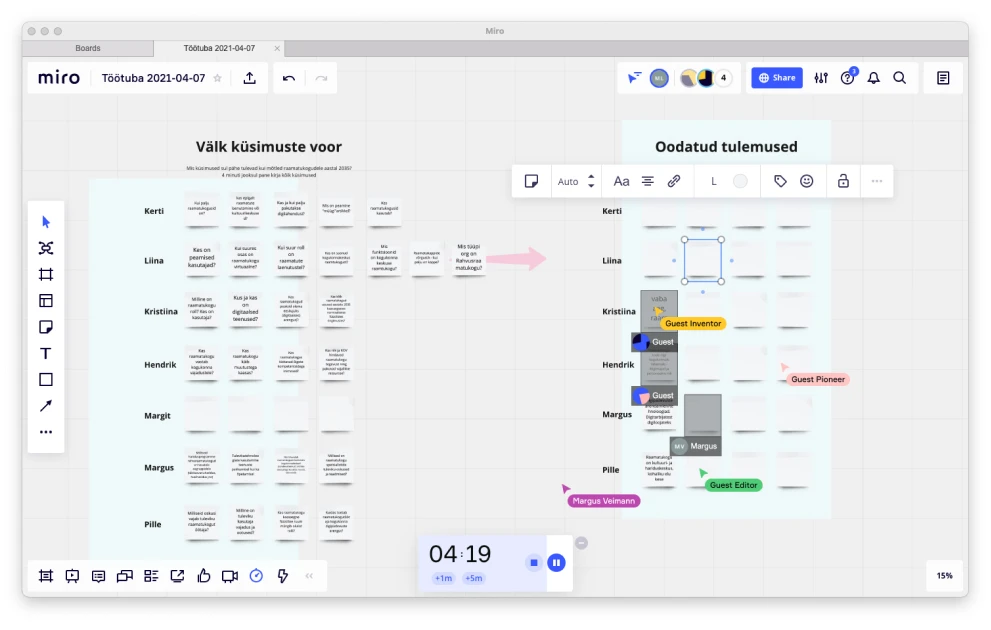
The goal of the future scenario workshops was to hear different perspectives on the current state of public libraries and expectations for the future of public libraries. I conducted three two-hour workshops with 5-7 participants each.
There was a lot of excitement among the participants about the future of public libraries. Even if they had not thought about libraries before, after a bit of a warm-up, we were able to discuss exciting concepts and visions for libraries.
Running remote workshops taught me as much as the content itself. Many participants were new to tools like Miro, so I adapted my facilitation style:
-
Acted as a “secretary” — typing up inputs, moving sticky notes, and reducing tech friction
-
Prioritized conversation over tools — making sure that discussion led the process
-
Focused on outcomes, not outputs
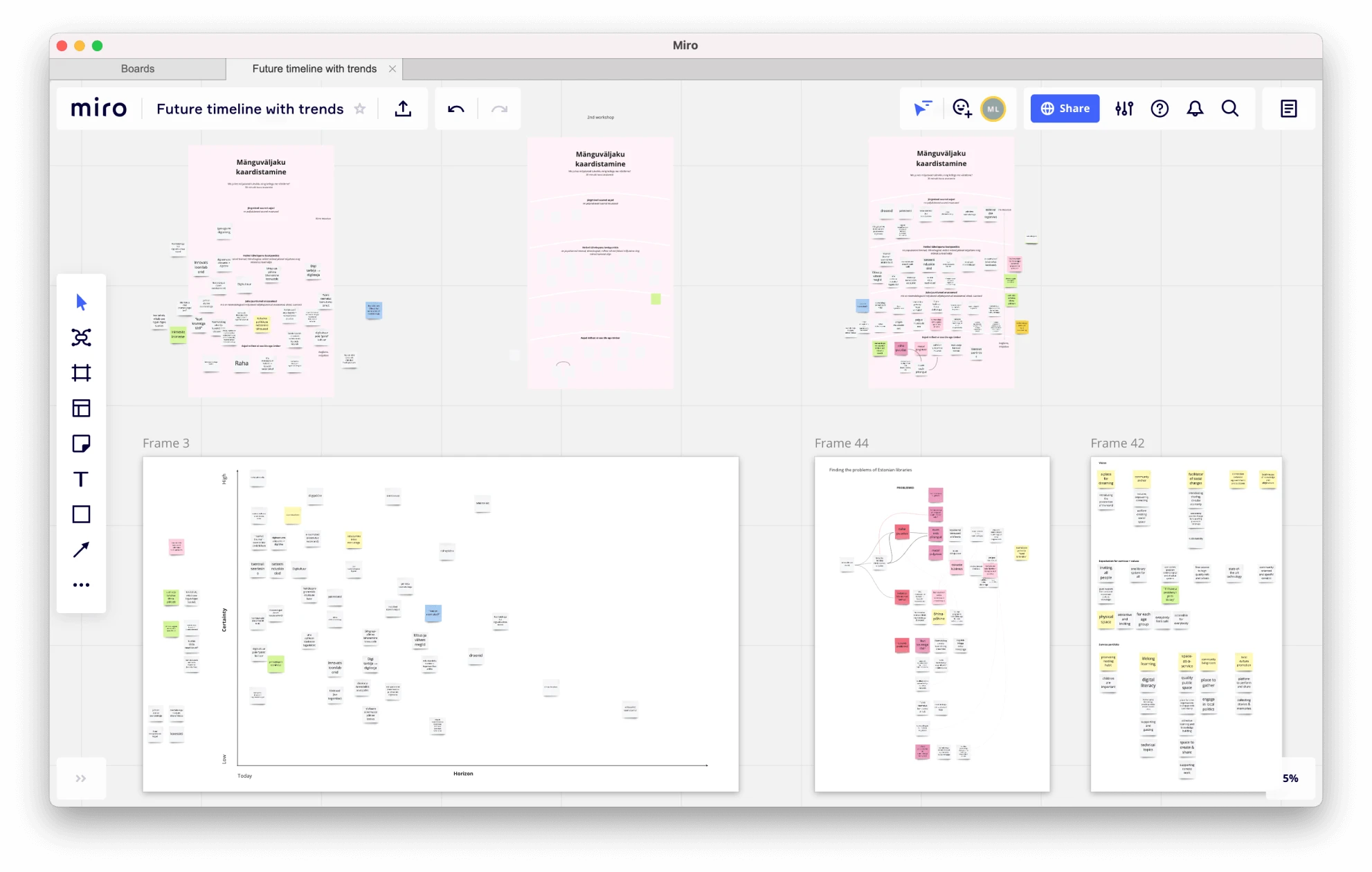
Future of public libraries
I do not believe in a one-size-fits-all solution for public libraries. There can not be one perfect library.
Instead, my vision for tomorrow’s libraries is based on five guiding values. These values are the result of workshops and my desktop research on how to maximize the benefits of public libraries.
I have learned that the library of tomorrow will be
-
accelerate positive change within the community,
-
introduce the new possibilities of the world,
-
help people become creators of culture and knowledge, and
-
be a link between government and citizens.
Based on the research and workshops, I identified five guiding values for the libraries of tomorrow:
-
Community-led — shaped by local needs, not just national standards
-
Person-centred and aspirational — supporting individuals’ goals, not just transactions
-
Creation-first — enabling people to create, not just consume
-
Conversational programming — designing for dialogue, not monologue
-
Dialogue-based learning — prioritizing peer exchange over top-down instruction
The future library is not a one-size-fits-all blueprint — it’s a flexible civic infrastructure rooted in possibility.
Reflection
This project grew from a belief: public libraries can be transformative civic platforms. They won’t solve every problem, but they can play a unique role in helping communities respond to complexity — if we rethink how they’re designed, funded, and governed.
I am not claiming that public libraries hold all the solutions, but I argue that public libraries can help solve important problems, enable creativity, and transform the lives of community members when used properly.
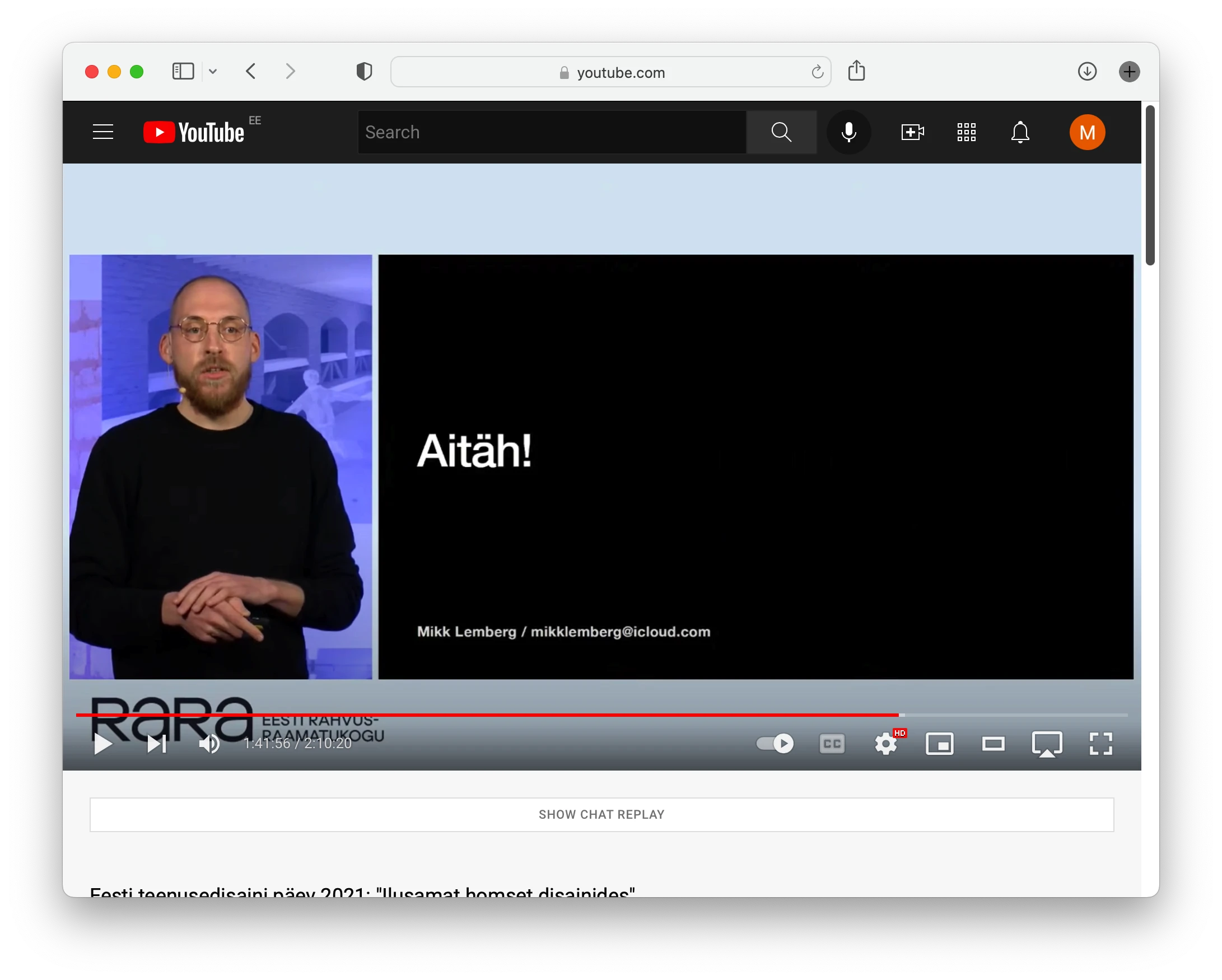
I spoke about the journey at another conference ↗
At the very least, I was able to find a critical intervention point to begin the process toward a preferred future. Even if the path I suggested is not the right one.
The biggest challenge for me? Moving from researcher mindset to implementer mindset. The topic’s systemic nature required a lot of exploration before I felt confident proposing change.
Therefore, there is much for other designers and researchers to explore regarding the same topic. A few interesting topics to continue the transformation process:
-
How should public library networks be managed and funded as services extend beyond culture?
-
How can physical spaces become more modular, welcoming, and multipurpose?
-
What kinds of digital services should libraries offer — and how can they feel inclusive, not institutional?
-
What capabilities do libraries need to become design-literate organizations?
Acknowledgements
-
Partner: National Library of Estonia
-
Mentor: Jana Kukk, PhD
-
Supervisors: Tanel Kärp, MA and Nesli Hazal Akbulut, MA